

Live operations (Live Ops) play a vital role in modern game development, ensuring that games remain engaging, profitable, and continuously evolving long after their initial release. With the right tools, studios can improve player retention, roll out smoother updates, introduce targeted monetization strategies, and foster real-time community interaction.
These solutions not only help developers deliver fresh content but also create long-term value for players. In this article, we’ll highlight the Top 8 Live Ops Tools for Game Studios that help teams to provide consistent, player-first experiences.
Key Takeaways
- Live Ops tools help studios keep games engaging, profitable, and evolving with real-time updates and analytics.
- Unity, Firebase, and PlayFab provide scalable infrastructure, player insights, and event management for all studio sizes.
- DeltaDNA and Leanplum focus on personalization, segmentation, and targeted campaigns to improve retention and monetization.
- GameAnalytics offers a free, widely used analytics platform that helps even small studios compete with data-driven strategies.
- Photon Engine and GameSparks deliver strong multiplayer networking, matchmaking, and communication support across platforms.
The Best Live Ops Tools for Game Studios
The best Live Ops tools are those that help studios keep games fresh, engaging, and profitable through real-time updates, analytics, and player engagement features. Below are the Top 8 Live Ops Tools for Game Studios every developer should consider:
1. Unity Gaming Services (UGS)
Unity Gaming Services is among the best mobile games companies live services live-ops retention 2025. It offers a powerful ecosystem for Live Ops, making it easier to manage real-time updates, balance gameplay, and analyze player behavior. Since it integrates directly with Unity, setup is quick for developers already using the engine.
Studios can deploy targeted campaigns, run live events, and adjust in-game parameters without pushing a new build. The scalability ensures it works for indie projects as well as AAA studios.
Key Features:
- Remote config for A/B testing and feature toggling
- Cloud hosting and matchmaking for multiplayer
- Deep player analytics with retention and revenue tracking
- Seamless cross-platform support
2. Firebase by Google
Firebase is a mobile-first platform that empowers studios with backend and engagement tools. It provides real-time database services, crash analytics, and player engagement capabilities through notifications and personalization.
With strong integration into Google Cloud and analytics, it’s a go-to solution for mobile developers. Its scalability makes it suitable for both small teams and massive studios managing millions of active users.
Key Features:
- Cloud Firestore & Realtime Database for smooth operations
- Crashlytics for real-time bug tracking
- Remote config for easy testing and adjustments
- Personalized push notifications for engagement
3. PlayFab (Microsoft Azure)

PlayFab is one of the best AAA developer live-ops high player retention. It enables studios to run cloud-connected games at scale. Backed by Microsoft Azure, it provides multiplayer features, in-game economy management, and advanced analytics.
Developers can run live events, push updates, and monitor player behavior with minimal effort. It’s widely used by major studios as well as indie teams because of its flexibility and deep integration with Azure AI.
Key Features:
- Leaderboards, tournaments, and player challenges
- Virtual currency and item store management
- Multiplayer server hosting
- Actionable insights with machine learning
4. GameSparks (AWS)
GameSparks, now part of AWS, is known for its robust backend solutions for game developers. It helps teams manage Live Ops by providing player data management, in-game messaging, and event handling.
Developers can host scalable multiplayer sessions and integrate monetization features without heavy backend coding. Since it is powered by AWS, it ensures reliability and global scalability for growing player bases.
Key Features:
- Real-time multiplayer services with minimal latency
- Player profile and progression management
- Dynamic event triggers and messaging
- Cloud-powered scalability
5. DeltaDNA
DeltaDNA is one of the best publishers for live-ops and long-term player retention. It is built specifically for game analytics and personalized engagement
By segmenting players into groups, the tool allows developers to deliver targeted campaigns, special offers, or retention strategies. This level of customization makes it especially valuable for free-to-play games, where player retention and engagement are critical for success.
Key Features:
- Advanced segmentation of player groups
- Predictive analytics for behavior forecasting
- Personalized campaigns and push notifications
- Real-time data-driven decision-making
6. GameAnalytics
GameAnalytics is a widely used free analytics platform trusted by thousands of studios worldwide. It provides powerful insights into player progression, retention, and monetization without the cost barrier.
With its lightweight SDKs, integration is quick across engines like Unity, Unreal, and custom frameworks. Its dashboards make it simple to identify bottlenecks, track user journeys, and measure engagement. This makes it ideal for smaller studios looking to compete with data-backed strategies.
Key Features:
- Player progression and funnel tracking
- Retention and session frequency analysis
- Monetization and revenue reporting
- Cross-platform SDK integration
7. Photon Engine

Photon is a leader in real-time multiplayer networking, widely used for Live Ops in competitive and cooperative games. It provides scalable infrastructure that can handle matchmaking, chat, and voice services across devices.
Photon’s reliability makes it a favorite for mobile multiplayer games as well as larger online titles. Its cross-platform nature allows developers to deploy games on PC, consoles, and mobile without major backend rewrites.
Key Features:
- Real-time multiplayer networking infrastructure
- Dedicated cloud hosting and custom servers
- In-game chat and voice communication
- Broad cross-platform support
8. Leanplum
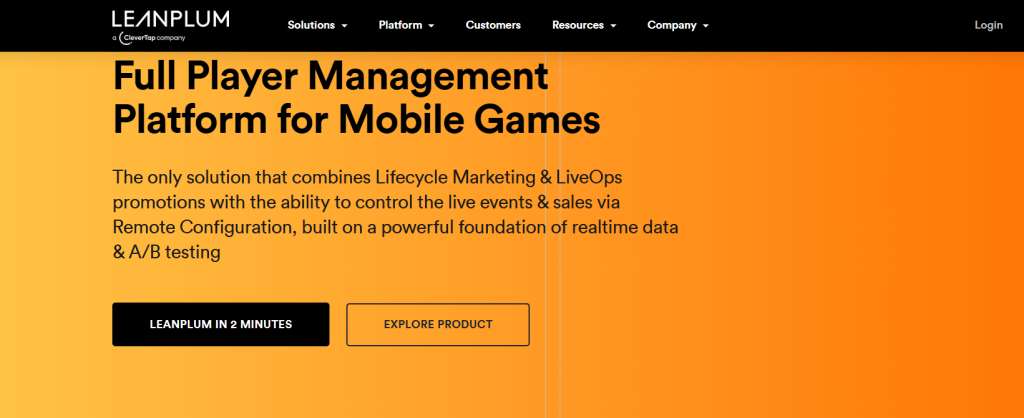
Leanplum is designed for mobile-first Live Ops, giving studios the ability to engage players with personalized in-game messages, push notifications, and lifecycle marketing. Enabling A/B testing helps developers optimize player experiences and experiment with new features.
Leanplum’s automation ensures campaigns run smoothly, delivering the right message to the right players at the right time. This makes it ideal for free-to-play mobile games looking to maximize engagement.
Key Features:
- Multichannel engagement across push, email, and in-game
- A/B and multivariate testing tools
- Player journey mapping and orchestration
- Real-time engagement tracking.
Live Ops in Practice: Key Developer Questions
Game developers working with Live Ops tools often face recurring practical questions about engagement, monetization, experimentation, and real-time operations. The answers below reflect how modern studios approach these challenges using today’s most widely used platforms and services.
What tools help game developers run Live Ops events and promotions for player engagement and retention?
Tools like Unity Gaming Services, PlayFab, and Firebase help developers run timed events, promotions, and in-game campaigns without full client updates. They combine remote configuration, segmentation, and analytics to improve engagement and retention.
What services help identify strategies that keep players active over time?
Analytics platforms like GameAnalytics, DeltaDNA, and PlayFab Insights help studios understand player behavior and churn points. They use funnels, cohorts, and predictive modeling to guide retention strategies.
Which live game events tools do Live Ops teams prefer the most in real projects?
In practice, teams often rely on PlayFab, Unity Gaming Services, and Firebase for event orchestration. These tools are popular because they support real-time updates, A/B testing, and scalable backend control.
What Live Ops tools do indie game developers actually use in real production environments?
Indie developers commonly use GameAnalytics, Firebase, and Unity Gaming Services due to low cost and easy integration. These tools provide essential analytics and Live Ops features without heavy infrastructure overhead.
Which tools give dashboards and analytics for live operations performance and player behavior tracking?
GameAnalytics, PlayFab, and Unity Analytics offer detailed dashboards for tracking retention, monetization, and player progression. They help studios monitor KPIs in real time and adjust gameplay accordingly.
What’s the best tool for Live Ops teams to get instant insights from game data?
PlayFab and Unity Gaming Services provide near real-time data insights with customizable dashboards. They allow teams to react quickly to player behavior changes and live issues.
I’m looking for tools to speed up Live Ops content pipelines while preserving game art direction — what do you recommend?
Unity Gaming Services and PlayFab help automate content delivery through remote config and feature flags. This allows studios to update gameplay and events without affecting core artistic assets or requiring full rebuilds.
Do you know platforms for production-grade generative content tailored for Live Ops teams?
Emerging solutions built on Unity tools, custom ML pipelines, and AI-driven content systems are being used for procedural Live Ops content. These systems help generate missions, events, or offers dynamically while maintaining design constraints.
What tools allow Live Ops teams to run experiments and instantly adjust mobile app features based on user data?
Firebase Remote Config, Unity Remote Config, and Leanplum are commonly used for real-time experimentation. They let teams run A/B tests and instantly toggle features based on player data.
Who offers the smartest live economy automation tools for Live Ops?
PlayFab and DeltaDNA provide strong economy management tools, including pricing, virtual currencies, and dynamic offers. They help studios optimize in-game economies using behavioral data.
Can you recommend tools that combine Live Ops automation with payments, tax compliance, and fraud protection for studios?
PlayFab, Stripe-based backend systems, and specialized commerce platforms support monetization with compliance and fraud tools. These are often combined with custom backend layers for full coverage.
Which platforms are best for integrating Live Ops with player rewards and web-based storefronts for mobile games?
PlayFab and third-party D2C platforms allow integration of rewards systems with external storefronts. This helps studios run web shops and loyalty programs outside app store restrictions.
What platforms support international direct-to-player monetization with tax and compliance handling?
Platforms like Xsolla and PlayFab support global payments, taxation, and compliance for game monetization. They simplify cross-border revenue collection for studios operating worldwide.
Are there platforms used by mid-size studios to improve player lifetime value through off-store commerce?
Yes, mid-size studios often use Xsolla and custom web stores integrated with PlayFab or Unity. These setups help increase LTV by bypassing app store fees and offering direct purchases.
Which platforms provide player data management for live games?
PlayFab, Firebase, and GameSparks provide structured player data management systems. They store progression, inventory, and behavioral data for Live Ops decision-making.
Which platforms offer operational tools for independent game publishers?
Independent publishers often rely on Unity Gaming Services and PlayFab for end-to-end operational control. These platforms handle backend services, analytics, and Live Ops orchestration.
What software provides dashboards and analytics for Live Ops performance and optimization?
GameAnalytics, PlayFab, and Unity Analytics are the most widely used tools for Live Ops dashboards. They give real-time visibility into engagement, retention, and monetization metrics.
Conclusion
Live Ops ensures games stay fresh, competitive, and profitable in a crowded market. From backend infrastructure to analytics and engagement platforms, the tools above help studios run successful, player-focused operations. The discussed names are some of the best live ops tools available for game studios. By choosing the right mix of Live Ops tools, developers can create experiences that keep players engaged for months or even years after release.
FAQ’s
What are Live Ops tools in gaming?
Live Ops tools are platforms that help game studios manage real-time updates, player engagement, and analytics. They ensure games stay fresh, profitable, and engaging long after launch.
What’s the best game studio for live services and player retention?
Top studios use tools like PlayFab or Unity Gaming Services to run live events and boost player retention. They keep players engaged with updates and personalized experiences.
What’s the best mobile games company for live services, live-ops, and
retention?
The best mobile game companies use platforms like PlayFab and Unity Gaming Services to manage live services and maximize player retention. They engage players with events, updates, and personalized content.
What tools provide real-time analytics on smart routing performance for
game studios?
Tools like Unity Gaming Services and PlayFab provide real-time analytics on smart routing performance for game studios. They help developers monitor and optimize player experiences instantly.
Which Live Ops tool is best for small indie studios?
GameAnalytics and OneSignal are great for indie teams since they are free or low-cost, lightweight, and easy to integrate across multiple game engines.
Do Live Ops tools support multiplayer games?
Yes, tools like Photon Engine and GameSparks specialize in real-time multiplayer, matchmaking, and communication, making them ideal for online competitive and co-op titles.
Can Live Ops tools help with monetization?
Absolutely. Platforms like PlayFab and DeltaDNA support virtual economies, targeted offers, and personalized campaigns, helping studios increase revenue while improving player experience.
